Why the 20-Week Anomaly Scan Matters
The 20-week anomaly scan or TIFFA checks your baby's anatomy in pregnancy. Learn what fetal medicine specialists review and why timing matters.
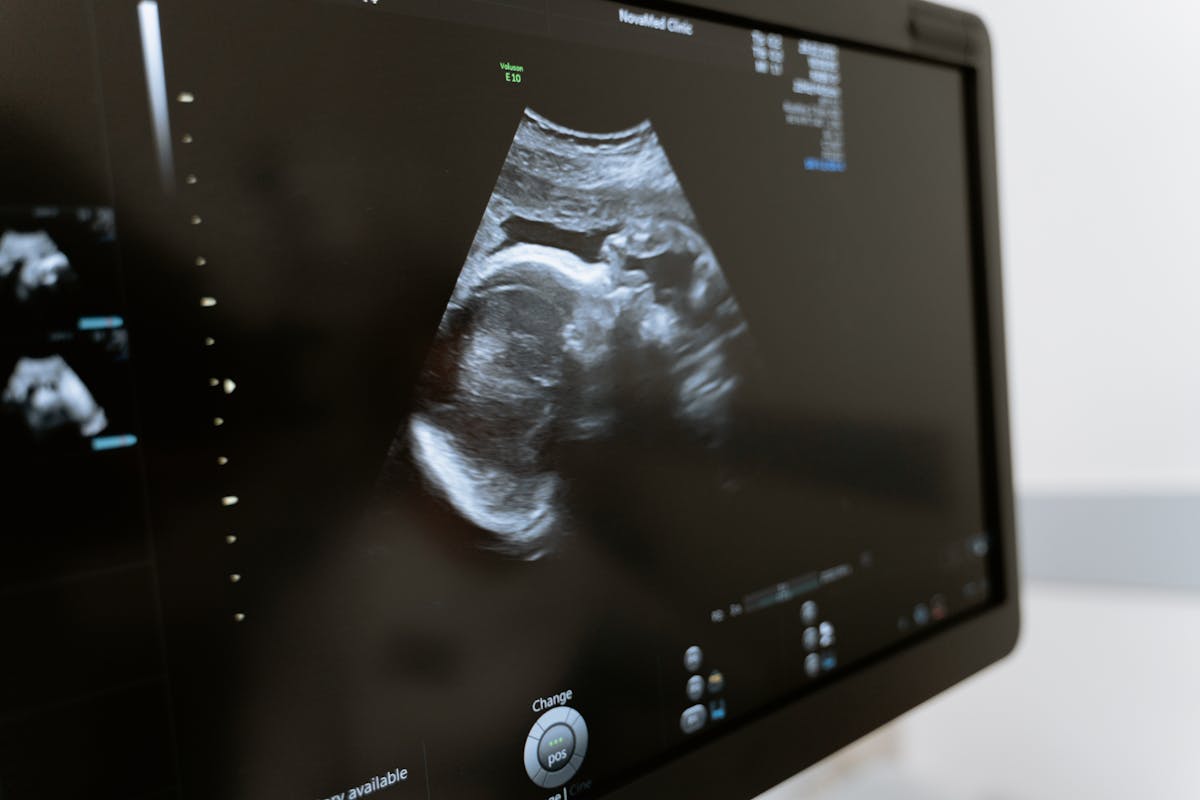
Somewhere between weeks 18 and 22 — when most moms-to-be in Delhi, Noida, Gurgaon and Ghaziabad are just starting to feel kicks and showing visibly — comes a scan that’s quieter than the first heartbeat moment but, in many ways, more important.
It goes by several names: the anomaly scan, the Level-II scan, the TIFFA scan (Targeted Imaging for Fetal Anomalies), or simply “the 20-week scan.” Whatever you call it, it’s the single most detailed look at your baby’s anatomy you’ll get during the entire pregnancy.
Mid-pregnancy checkpoint
What exactly is the 20-week anomaly scan?
The anomaly scan is a detailed, high-resolution ultrasound performed between 18 and 22 weeks of pregnancy — most fetal medicine centres in Delhi NCR recommend booking it at 19 to 20 weeks for the clearest images.
Unlike the dating scan (which tells you when the baby is due) or the NT scan (which screens for chromosomal conditions like Down syndrome), the Level-II scan looks at one thing very, very carefully: structure. Every major organ. Every developing system. Head to toe.
What your doctor is checking, organ by organ
A complete TIFFA scan is methodical, almost meditative. Your fetal medicine specialist will examine each of these in turn:
The anatomy checklist
Approximately 60 structures in a single, careful scan.
Head & brain
Skull shape, brain halves, cerebellum, ventricles
Face
Upper lip, palate, nasal bone, eye sockets
Spine
Every vertebra, three different views
Heart
Four chambers, outflow vessels, rhythm
Lungs & diaphragm
Development and correct positioning
Abdomen
Stomach, kidneys, bladder, bowel, cord insertion
Limbs
Both arms, both legs, all 10 fingers and toes
Placenta & fluid
Placental position, amniotic fluid levels
The scan usually takes 30 to 45 minutes — sometimes longer if your baby is napping in an awkward position. Bring a glass of cold water; a wiggly baby is easier to image.
Why this scan matters more than the others
Most pregnancies pass through the anomaly scan with a thumbs-up — roughly 95 to 97% of babies have no detectable structural concerns. But for the small minority where something is found, the timing of this scan matters enormously.
The 20-week scan exists, in part, to give families time, options, and a clear path forward — whatever they choose.
Many conditions found at this scan can be planned for, not panicked about. Some need a specialist delivery hospital with a NICU. Some need surgery soon after birth. Some need a paediatric cardiac team in the labour room. The 20-week scan is what puts the right people in the right room on the right day.
What if the scan picks something up?
First: take a breath. Many findings are “soft markers” that turn out to be normal variants. Your doctor will explain exactly what was seen, how certain the finding is, and what the next step is — usually a repeat scan, a fetal echocardiogram, or a consultation with a senior fetal medicine specialist.
At FemmeNest, we walk every couple through results in plain language — no jargon, no Google rabbit holes, no rushing.
A word about scan rules in India
Under the PCPNDT Act
In Delhi NCR, anomaly scans are regulated by the Pre-Conception & Pre-Natal Diagnostic Techniques Act. At any registered centre:
- The centre must be registered with the local district authority
- You will be asked to complete Form F before the scan
- The sonologist is legally not permitted to disclose the baby's sex
- Asking, hinting at, or pressuring for sex determination is a punishable offence
This is a good thing. It keeps the scan focused entirely on where attention belongs — your baby’s health.
What to bring, what to expect
- Carry previous reports: dating scan, NT scan with double marker, blood work
- Eat normally — fasting is not required
- Drink water about an hour before, if your centre asks
- Allow 60 to 90 minutes including paperwork and counselling
- Take your partner along — it’s a beautiful moment to share
Delhi NCR estimate
Anomaly scan cost in Delhi NCR
In Delhi NCR, the anomaly scan is generally priced between ₹2,500 and ₹5,500, depending on the centre and whether advanced 3D or 4D imaging is included. It is also covered under most maternity insurance plans.
A scan, not a verdict
The 20-week anomaly scan isn’t a pass/fail exam. It’s a snapshot — a chance to know your baby better, to plan well, and to bring the right people into the delivery room.
For most of you reading this, it will be the scan where you exhale and quietly say: everything looks good. And for those who hear something different, it’s the beginning of a careful, supported journey — not the end of one.
At FemmeNest — Centre for IVF & Gynaecology in East Delhi, our fetal medicine team offers accurate, compassionate Level-II anomaly scans for moms-to-be across Delhi, Noida, Gurgaon, Ghaziabad and Faridabad. Every scan is followed by a sit-down counselling session — because results without context aren’t care, they’re just numbers.
Frequently Asked Questions
The 20-week anomaly scan (also called TIFFA or Level-II scan) is ideally performed between 18 and 22 weeks of pregnancy. Most centres in Delhi NCR recommend booking it at 19 to 20 weeks for the clearest images.
They are the same scan. TIFFA stands for Targeted Imaging for Fetal Anomalies — it is the Indian term for a Level-II anatomy ultrasound performed in the second trimester to evaluate the baby's structure organ by organ.
The 20-week anomaly scan typically costs between Rs 2,500 and Rs 5,500 in Delhi, Noida, Gurgaon, and Ghaziabad. Costs vary by centre and whether 3D or 4D imaging is included. Most maternity insurance packages cover it.
The scan usually takes 30 to 45 minutes, sometimes longer if the baby is in an awkward position. Plan for 60 to 90 minutes at the centre including counselling and Form F paperwork.
when every detail matters
Book Your Level-II Anomaly Scan
Detailed, accredited fetal medicine scans with personal counselling — performed by senior specialists, explained in plain language. Currently offering an exclusive ₹10,000 discount on maternity packages for the first 1,000 moms-to-be.